
Alison’s Story – Childhood Cancer Awareness Month
Q: What has your experience been navigating childhood cancer survivorship?
When I was eight years old, cancer became part of my story in a way I never could have understood as a child. While I was fortunate to survive, survivorship came with challenges that lasted long after treatment ended. About three years later, I was diagnosed with PTSD, panic attacks, and an anxiety disorder. For a long time, I didn’t fully understand why I felt the way I did, but over the years I’ve worked hard to heal.
Therapy has been an important part of that journey, but so has sharing my story. Speaking publicly, writing about my experiences in school essays, volunteering with organizations like Candlelighters, and connecting with other survivors have all helped me process what happened and find purpose in it. While I don’t believe the anxiety ever completely disappears, I’ve learned healthy ways to manage it, and it no longer defines my life.
Cancer also gave me a perspective that I carry with me every day. It taught me resilience at an early age and reminds me that I’ve already overcome one of life’s biggest challenges. When I face difficult moments now, I often reflect on what I survived at eight years old, and it gives me the strength to keep moving forward. It also taught me not to take life for granted. I try to slow down, appreciate the little moments, celebrate milestones, and be fully present with the people I love because every day is a gift.
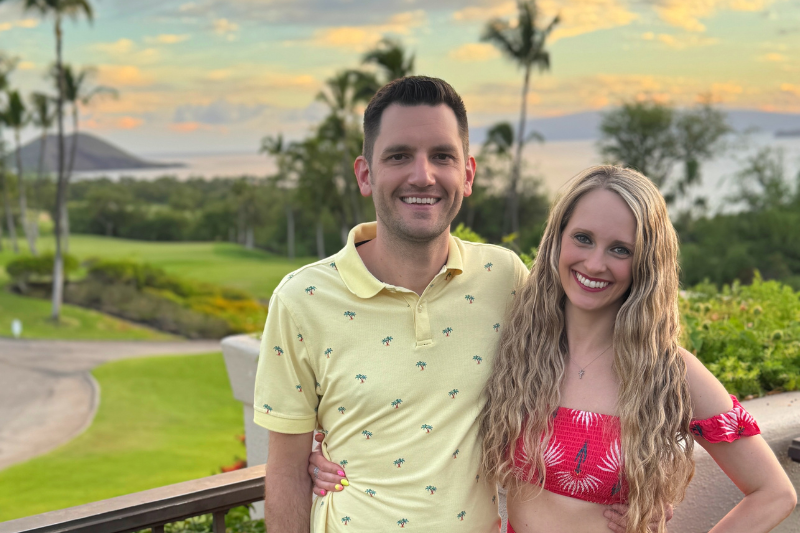
Today, I’m incredibly grateful for the life I’ve been able to build. I’ve been happily married for 12 years, I’m the proud mom of two wonderful children, and I work in risk management for a national bank. Along the way, I earned my Certified Public Accountant (CPA) and Certified Internal Auditor (CIA) certifications—accomplishments that I’m incredibly proud of. Looking back, I don’t think my eight-year-old self could have imagined where life would take me. Cancer will always be part of my story, but it has never defined who I am. Instead, it has shaped the resilience, gratitude, empathy, and perspective that I carry into every part of my life. One of the greatest blessings to come from my experience has been the opportunity to support other families walking a similar path. If sharing my story helps even one child or parent feel a little less alone, then something meaningful has come from one of the hardest chapters of my life.
Q: What is one thing you wish others knew/a common misconception about childhood cancer survivorship?
One of the biggest misconceptions is that once treatment ends, life simply goes back to normal. While many survivors look healthy on the outside, the emotional and physical effects of childhood cancer can last for years or even a lifetime.
At the same time, I think many survivors simply want to be treated like everyone else. We don’t necessarily want to be defined by our cancer history—we want to be seen for who we are today. Our experiences have shaped us, but they don’t define our identity. A little understanding and empathy go a long way, while allowing us to live full, normal lives.
Q: What is one piece of advice you would give to other childhood cancer survivors?
Take life one day, one challenge, and one victory at a time. Healing isn’t always linear, and it’s okay if some days are harder than others.
Remember that surviving cancer doesn’t mean you have to be strong every single day. Give yourself grace, ask for help when you need it, and don’t be afraid to share your story. You never know whose life you might impact just by being open about your own journey.
Most importantly, don’t let your diagnosis define your future. It is one chapter of your story—not the whole story. The resilience you built through your experience can become one of your greatest strengths as you navigate whatever life brings next.